Three tabs. Each one shows a real part of the product.
Choose a topic. Each tab has a short narration, the films and screens for it, and something you can try.
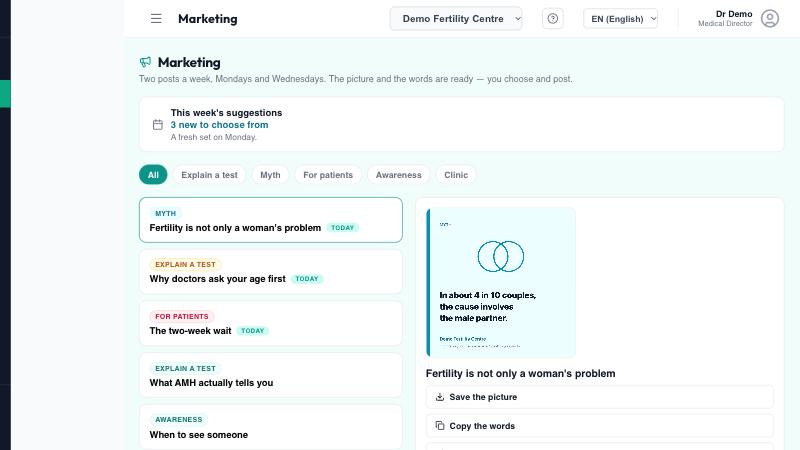
Two posts a week, written for your clinic.
Nobody at a busy clinic has time to post. IVFComputer drafts the post, draws the picture and writes the words. Your team chooses one and posts it on the clinic's own channels.
Tap play to hear the marketing narration.
- Every post is educational. No success rates, no prices, no offers.
- The picture is drawn for the post, so a clinic does not need a designer.
- The clinic's own photos and voice can be used, where the clinic has them.
- Posts go out on the clinic's own WhatsApp, Instagram, Facebook or LinkedIn. We do not post for the clinic.
Try the rules
Type a sentence a clinic might want to post. The check shows what the rules stop. This is a simple demonstration, not legal advice, and a doctor still reviews every post.
The films
Each one is a real output from the product, or a short film made to explain it. Press play to hear the sound.
Every enquiry, traced to the campaign that brought it.
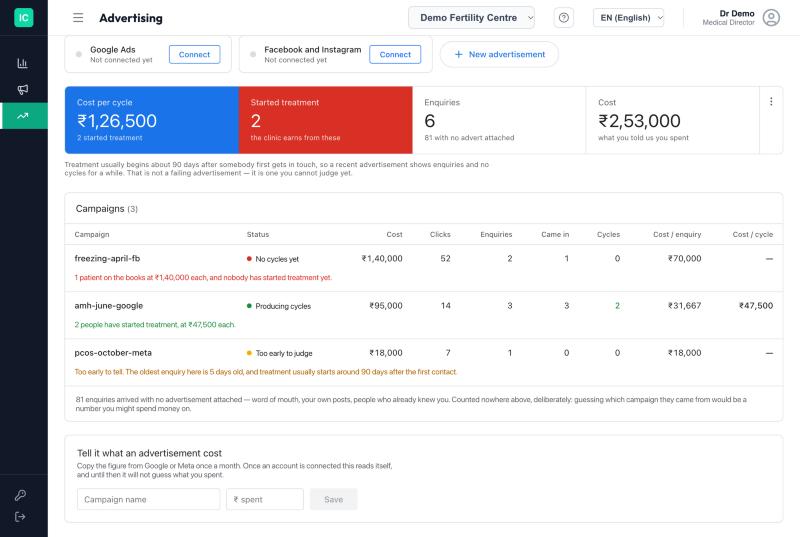
Enquiries arrive in the clinic's own inbox. IVFComputer keeps track of which campaign each one came from, so the clinic can see where its patients come from.
Tap play to hear the advertising narration.
- Each campaign has its own line: spend, clicks, enquiries, patients who came in and cycles.
- Google and Meta connections are still waiting on their approvals. Until then, the clinic types in the spend once a month.
- Cost per enquiry is worked out once there is spend. Cost per cycle needs cycles too.
- It does not guess which campaign an enquiry came from. Enquiries with no advert attached are counted separately.
Where patients come from
A two-minute film about how couples choose a clinic, using the national register. Subtitles are burned in.
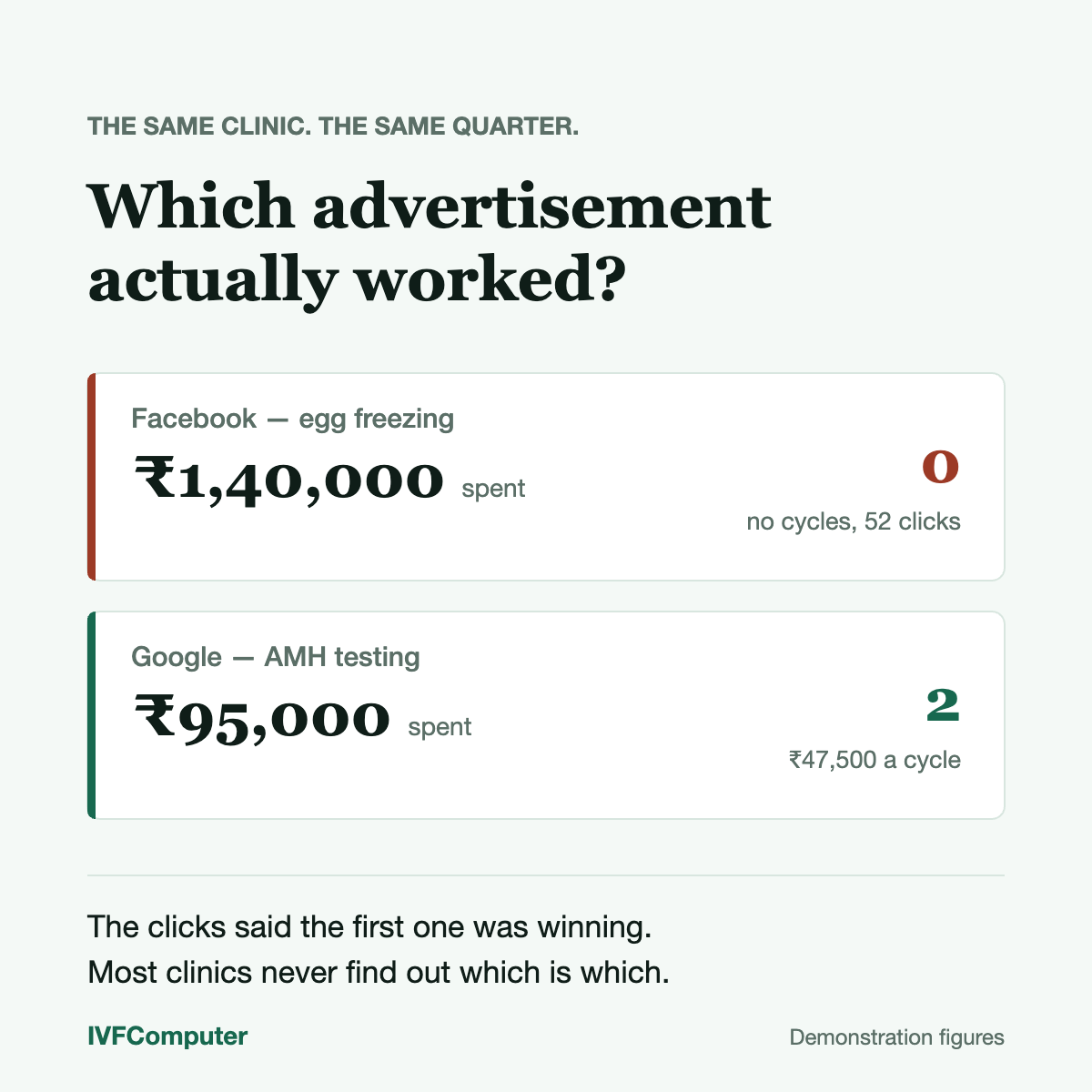
Which advertisement actually worked?
Two campaigns, the same clinic, the same quarter. One spent more and brought in no cycles. The other brought two. Most clinics never find out which is which.
Tap play to hear the analytics narration.
- Treatment usually starts about 90 days after the first contact. A recent ad can show enquiries and no cycles, and the screen says it is too early to judge.
- Cost per cycle is spend divided by cycles, from the clinic's own records.
- Nothing is shown as a success rate, because the software does not publish one.
Try the cost per cycle
Type what a campaign spent and how many cycles came from it.
₹95,000 spent ÷ 2 cycles.
Want to see this with your clinic in mind?
A 20-minute video call. We go through the posts, the advertising screen and the cost-per-cycle view.